
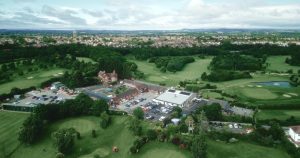

Set between the Mediterranean and the Mar Menor, near Murcia in Spain
The La Manga Golf Resort, Murcia, south-east Spain was opened in 1972, set up by an American gentleman called Greg Peters who decided to copy the large and popular resorts in the USA and bring a similar logic to Spain. This involved developing two golf courses, other leisure facilities and a hotel, and in order to give the investment a decent payback, it included permission to build a number of additional properties around the golf facilities.
Peters, who was a successful businessman in America and Spain prior to developing La Manga, had a remarkable vision for the complex. He was lucky in as much as his timing coincided with a massive influx to Spain from British and northern European tourists who were encouraged by cheap flights, great weather and a much more welcoming nature after Franco’s draconian rule was relaxed substantially.
Peters knew that to encourage golfers to visit and buy property at La Manga, he had to make the resort highly attractive. Both the North and the longer South courses were built to a very high standard and the hotel with its dominant view over the golf courses was always aimed at the top end.

A racquets club, bowling centre, football pitches, cricket grounds and horse riding were added, all of which complemented the various sporting opportunities at the complex. Over the years the resort has also included a casino and a spa in varying locations. It was important that the world saw La Manga as a top tournament destination, so it hosted the Spanish Open on many occasions and memorably in 1975 Arnold Palmer won, eagling the last to pip Matt Runge, a slightly dodgy journeyman pro from America who had had an almost unassailable lead, until Palmer broke his dreams on the 72nd hole. Arnold Palmer’s influence at La Manga was felt even more widely when he was asked to do some redesign work on the courses in the 1980s.
The Ballesteros family have strong links with the La Manga Club. Seve was a frequent visitor and resident at the complex and his elder brother Manuel was the club pro for many years. In Bar 37 there is a proud display of Seve memorabilia. He is sorely missed, but strangely present at La Manga.
The courses continued to attract top events including the European Tour School where the editor played with mixed results! Much more recently, La Manga has once again played host to some fairly big events, including the Legends Tour Senior Masters which is played every November for the over 50s.
Over the years, increasing numbers of apartments and villas were built around the courses and the network of roads and communities grew. A third course was added in the 1990s, when Dave Thomas built the West course in the heavily wooded natural park area towards Portman.
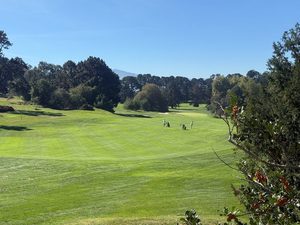
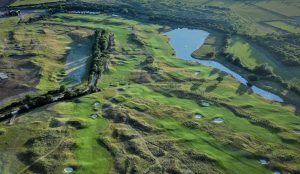
The three courses offer a variety of playing styles. The North with a par of 71 is slightly shorter than the South course, but both share rolling fairways lined with palm trees and plenty of water features and barrancas – the Spanish word for the deep ditches and ravines, which are so important for water run-off in stormy times.

Typically, the South will host the biggest championships, as it is slightly longer and has a par of 73. The South course is flatter than the North, but both are easy to walk with gentle undulations across the pair.
The West course is a completely different beast having been carved out of ancient woodland and carefully constructed with environmental concerns very much to the fore. The West course opened its first nine holes several years before the back nine was started and faced substantial opposition from members of the Green lobby. The course today is a great test and requires more precision, particularly with tee shots than either the North or the South. It is difficult to detect the direction of the wind which swirls through the corridors of trees, much in the same way as at Augusta for the Masters. Some find the West frustrating to play as one is often required to hit a tee shot on a par five with a mid iron to ensure the ball is properly positioned for the rest of the hole. It is a great challenge and one that grows on golfers.
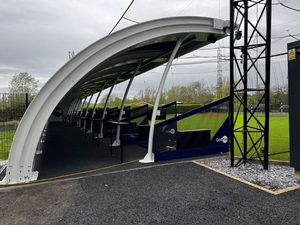
The practice facilities at La Manga are outstanding. The golf range was the original cricket ground but was developed into a large range – both covered and uncovered – that can host scores of golfers simultaneously. There are three pitching greens and several putting greens, allowing all aspects of golf to be learnt, practiced and refined. Craig Donnelly took over as PGA professional and Academy Director a few years ago. Together with his right-hand man and fellow PGA professional, Eain Hanna, they are spearheading a coaching revolution at the golf academy. All standards of player are taught with great effect: their reputation and that of the academy are growing strongly.

Since its inception, the complex has had a number of different owners, the most recent of which is Hesperia. They acquired the course and hotel just before lockdown and then had to endure a terrible period when there was little income and not much support from the Spanish government for businesses that were so reliant on tourism, and so exposed to huge losses. Nevertheless, over the last couple of years, all of the courses have been transformed. After lockdown, the courses were in poor condition, but each year since has brought more investment, more care and attention and infinitely better playing surfaces. The courses in 2026 bear little relation to a few years ago and are a complete joy to play.
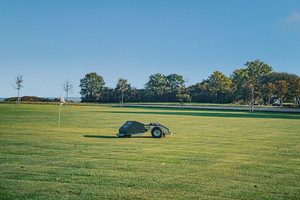
In order to improve the quality of the greens, moisture tests are taken several times a day on each green to ensure that the irrigation required is perfect. The irrigation system itself has been completely overhauled with water now available across the estate at the correct pressure and quantity. There has been a huge new fleet of buggies and most of the greenkeeping machinery has also been renewed. All of these things are phenomenally important to running a single golf course, but when you triple the responsibility, it is even more important to get everything right.

A single 18-hole round of golf at La Manga generally costs between €75 and €198, depending on whether you stay at the resort and which booking platform you use. Standard walk-up public rates listed by independent golf guides can reach up to €228, but the average online booking rate hovers around €114.
The hotel has been substantially upgraded and is now a Grand Hyatt and well worth its 5-star rating. A new infinity pool for guests has been installed overlooking the 18th green of the South course, along with a stunning spa beneath the hotel, replacing the previous spa that was rather strangely located in another part of the resort. The Nineteenth Hole bar is the centre of evening activities where a stiff cocktail can be enjoyed before sampling delicious food at the Italian, Asian or Japanese restaurants, or a special night at gastronomic Ampola restaurant.

There are over 2500 private dwellings dotted around the courses and hotel. This makes La Manga the most highly developed golf complex outside of America. It is a marvellous place to live permanently or part-time and there are rarely enough properties available for sale to match demand. With a dozen independent restaurants on site, shops, supermarket, even a petrol station, there is little need to get off site for those lucky enough to have a home here.

For those who wish to play something other than golf, there is an outstanding Racquets Club, which has been completely reimagined by Nick Munn and his team. The investment has been considerable but the Racquets Club is now one of the main attractions at La Manga. The centre now includes 12 Padel courts along with around 20 tennis courts – a mix of clay and hard courts. The centre also has a completely refurbished gym, a racquets shop and an excellent restaurant and outside bar for the essential post-match drinks. The whole centre is extremely well run, and is a hub of activity and fun for all ages.

However, away from the club the towns of Cartagena, Murcia and the delightful south eastern Spanish coastline are easily available. The name La Manga translates as the sleeve and comes from the long spit of land which has created one of Europe’s largest lagoons, known as the Mar Menor. This is just a few miles from the resort, but offers a wealth of water sports in the shallow and shielded lagoon.
To get to the resort there is a choice of the Corvera Murcia Airport, which is ideally placed for La Manga Club being only a 30-minute drive away, and Alicante Airport which is also ideally placed being a 90-minute drive away.
On a personal note, I can’t give a higher rating than to own a home at La Manga myself and enjoy it for over five months a year.
For those wishing to know more please visit the website: www.lamangaclub.com/