


Conveniently located just off the A13 and only 20 minutes from central London, Ingrebourne Links Golf & Country Club is an impressive golf operation
The club opened in 2017 and offers an unusually located, but spectacular, inland links golf course, as well as a state-of-the-art golf range and health club facilities, and a striking purpose-built clubhouse.
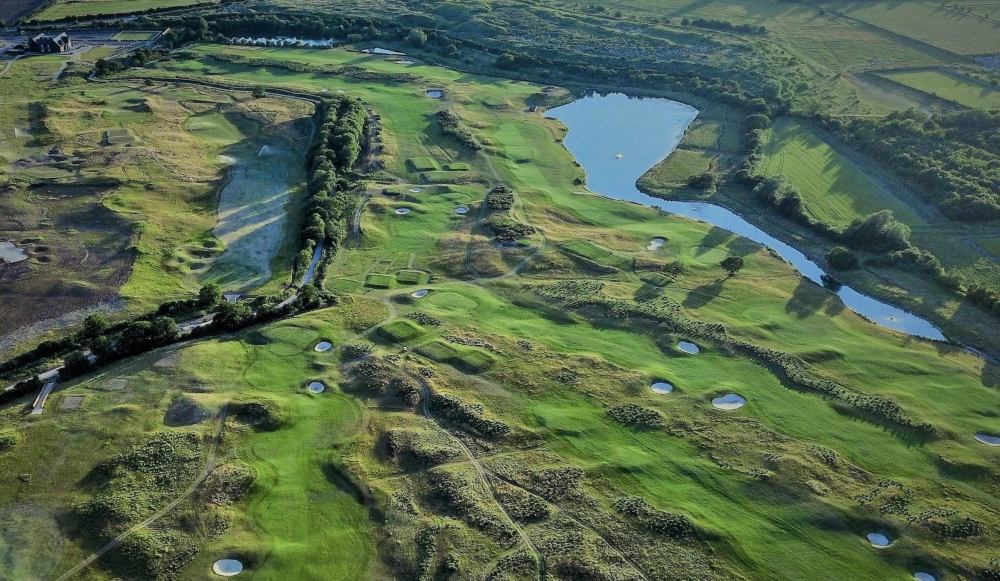
The golf club has been created as a result of years of planning and an enormous amount of inert importation. Imported and inert material can mean that a well-conceived project can be cash positive in the construction of a new golf course: this is obviously not always the case, but for certain key sites in busy areas this is a great opportunity. Ingrebourne Links was built in this manner and the resulting course, 20 years after conception, is now a joy to behold.
Huge construction projects have to get rid of thousands of tons of soil and debris from building projects: it is a very specialised industry and one where the returns can be considerable, but also one in which red tape is a serious drag to a speedy development. With so much building and general construction work in and around London, it is not surprising that the soil, subsoil, rubble and other detritus from construction projects is now used to make golf courses and other landscape areas. The Environment Agency has very strict controls as to what materials are allowed to be imported onto a site suitable for a golf course. Critically, these materials must be inert, so in other words they do not leach any toxicity into the water course and risk polluting the immediate area and creating further problems downstream.
Modern golf course construction is nothing like it was 100 years ago. The machinery available for a start is capable of moving hundreds of tons of soil with relative ease. In addition, planning considerations – especially environmental ones – are key to getting permission to build a golf course in the 21st century.
Obviously, links golf courses constructed over 100 years ago have been largely shaped by the elements with adjustments made for greens, bunkers and tees. To replicate this style of golf course in the modern setting without the benefit of naturally formed dunes is quite a task.
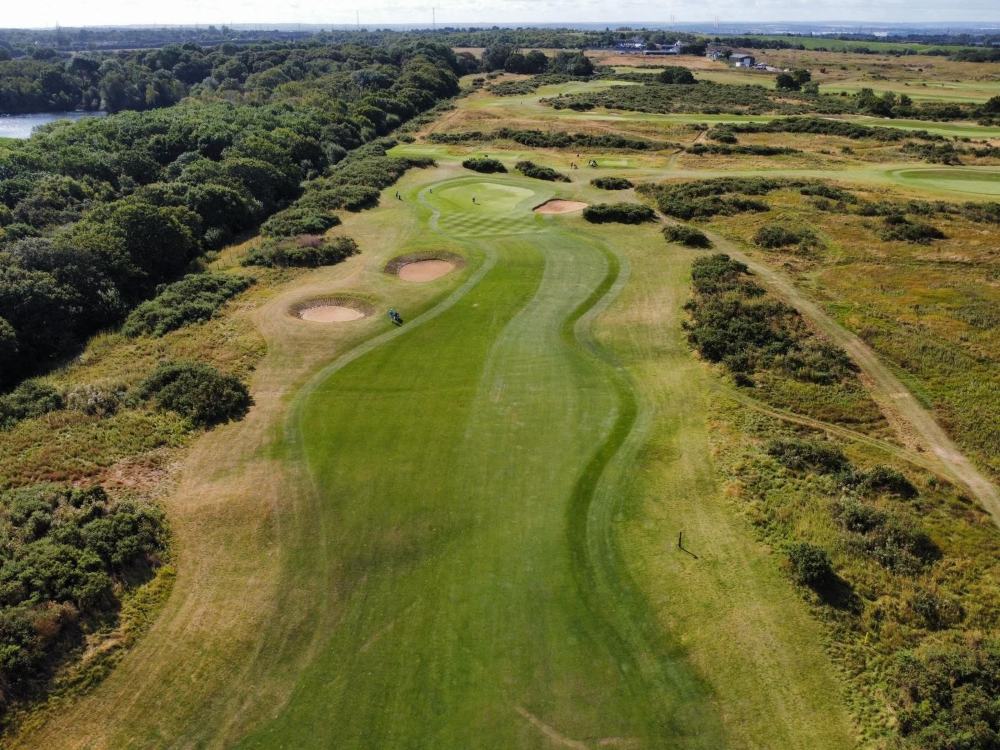
Golf Features caught up with Alan Walker, a past captain of the PGA and a noted golf course architect. He was responsible for the original design and overseeing the build during construction.
Golf Features: How did you first get involved with the project?
Alan Walker: I knew the owner of the land, and, over a period of time, we discussed its potential for a golf course. Those early conversations developed into some initial design ideas before the project eventually moved forward.
Golf Features: What did the site look like when you first saw it?
Alan Walker: The site was a large expanse of around 400 acres with a natural fall of approximately 12 metres from the highest point down towards the eventual clubhouse location. It offered plenty of space, some good topography in places and the opportunity to create golf holes with real individuality.
Golf Features: The course now has a wonderful links feel to it. What made you want to create an inland links on the site?
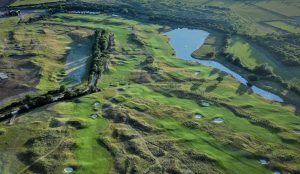
Alan Walker: Well, there are two reasons that a links style course was created, one being that I felt there were no similar courses around where that style was prevalent, and that the location was open with consistent breeze coming off the Thames Estuary and across the Rainham Marshes. The second reason was that to build the course we were importing inert soils, so links style shapes could be easily created. Apart from three oak trees on the course every other feature, ground contour, green shape and every planting is man made.
Golf Features: Are there any specific features of the design that you are particularly pleased with?
Alan Walker: I like the way that each hole has its own individual setting. Because of the size of the land, I had the luxury of large spaces to work with. I like the routing of the course and how the holes move around the various compass points. The wind is a factor and alters the holes from the various directions it plays. My aim was to build a strong test of golf but one that would be enjoyable for every standard of player. The landing areas are generous enough to accommodate every standard of golfer, but the best angles into the greens still reward thoughtful placement.
Golf Features: The practice facilities are extensive and occupy an area not immediately adjacent to the main course. What was the thinking behind this?
Alan Walker: We started by constructing the golf range and the 9-hole, par 3 ‘mini links’ course first. At concept stage I had orientated the golf range in a slightly different direction, but by adjustment we freed up enough land to build the mini links. During the PGA Club Professionals Championship held at Ingrebourne last year we ran a very efficient shuttle service from the range to the course. When you build golf facilities many times the land dictates where things have to go.
Golf Features: How much do you enjoy revisiting the site – two decades after it was first conceived?
Alan Walker: I love going over to the course, seeing it evolve and mature each year. I’m very pleased that Ingrebourne has become a tournament venue and how well it stands up under competitive conditions. Players find the course very tough from the black tees, and that’s what I set out to design. We are fortunate to have an excellent Course Manager in Ben Adams who, together with his team, produces tournament-quality playing conditions throughout the year.
Golf Features: Do you have favourite holes?
Alan Walker: The opening hole immediately asks the golfer to make decisions, especially from the tee. I enjoy the run of the 3rd, 4th and 5th holes because they steadily increase the challenge. The 7th and 13th are probably the toughest tee-shots on the course, while the long 15th offers spectacular views from the highest point on the property. My favourite, though, is the short 17th. It isn’t long, but its elevated green and timber-fronted surrounds demand accuracy and nerve, especially with the normal cross wind blowing. Every hole offers something different, and that’s what makes the course memorable.
Golf holes are never really finished; they continue to evolve as the landscape matures and the golfers discover new ways to play them. Having been involved with Ingrebourne Links from the very beginning, it will always hold a special place in my professional life.
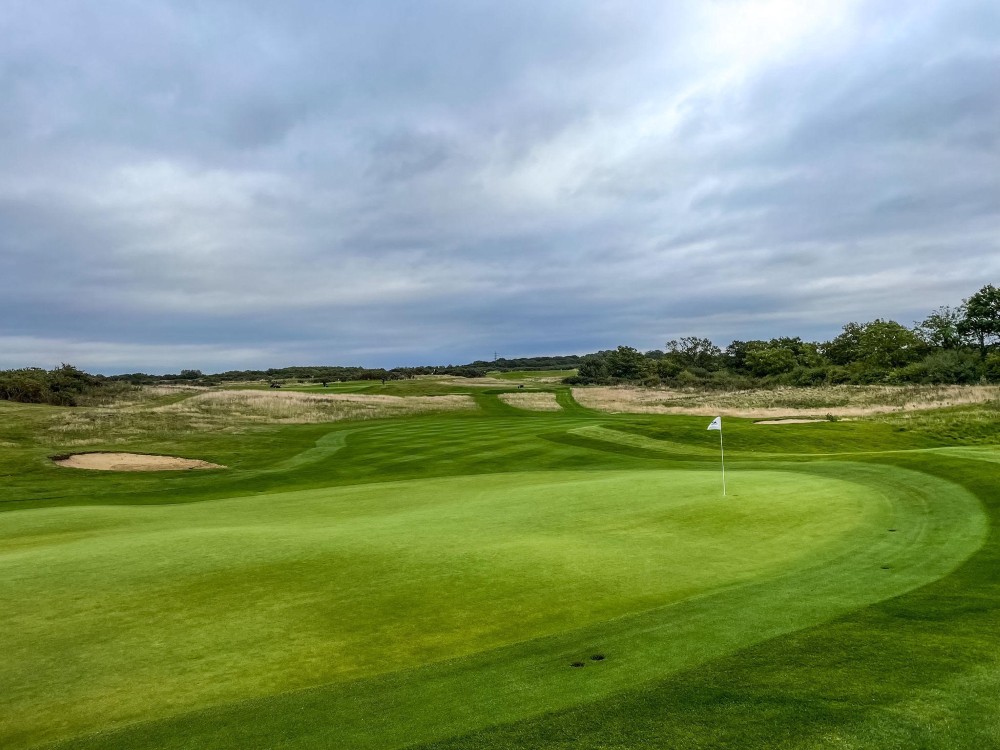
The course is composed of two nine-hole loops – the North and East courses – both of which are easily accessible for those walking and those using buggies. There are a number of high-quality Tegula paths which underline the fact that no expense has been spared on this project. These paths are very expensive, but the individual bricks can be lifted and reset in the event of ground movement or tree root damage, and so are ideal.
The front nine, with a par of 37, only contains one par 3, with three par 3s on the back nine, the cutest of which is the charming but devilish 17th, which measures just 120 yards, but can prove to be a card wrecker: the front and right hand side of the green are guarded by sleepers which will sharply repel any ball striking them.
The fairways are easily defined by the created contours and also by plenty of gorse, which provide a real penalty for those who stray off the straight and narrow. The par 5s are “gettable” and all the holes have delightful swales on and around the greens, which require local knowledge and a deft touch.
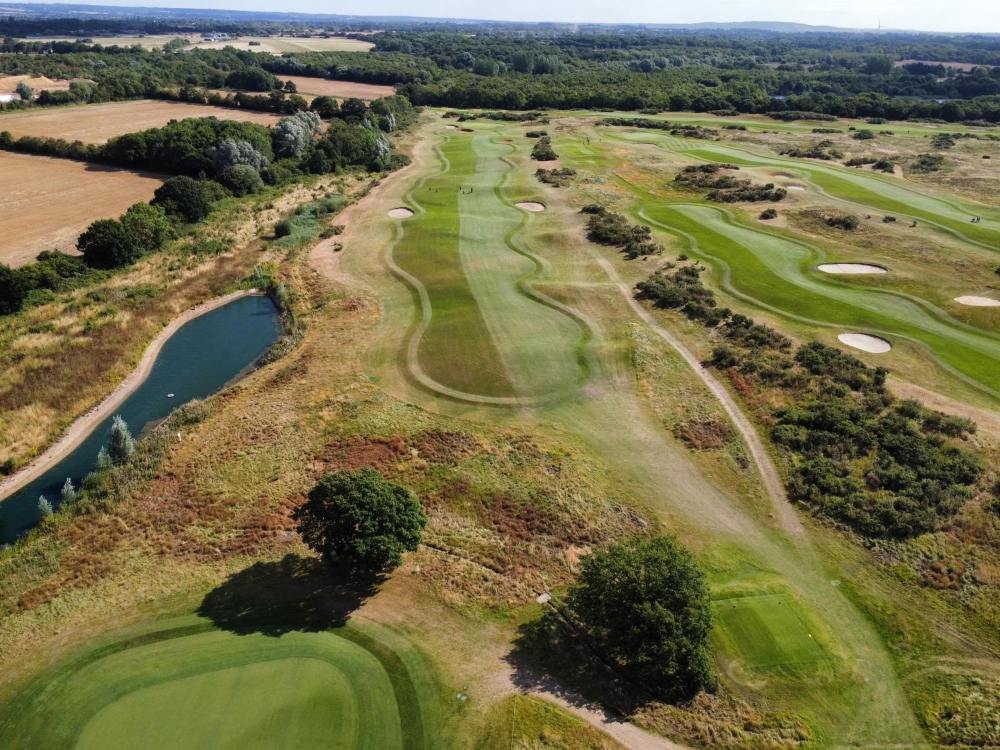
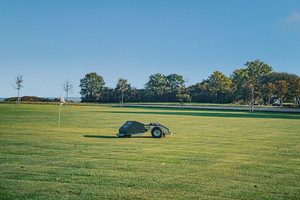
The course is fairly generous for those hitting an off-line shot or approach, providing you stay out of the gorse. The course benefits from plenty of accessible water from its own naturally-filling reservoirs, which allows all of the playing areas to be fully irrigated, even in this, the hottest of recent summers. The bunkering is strategic and pleasing on the eye, framing the holes with a clearly defined route for the better player. There are three sets of tees available: black, white and yellow with the black tees measuring 7122 yards – this is indeed a challenge for the better players off these tees, especially if there is anything more than a stiff breeze. It is great to play a course that is not only a good test for strong players but also provides higher handicap golfers with a very enjoyable experience.
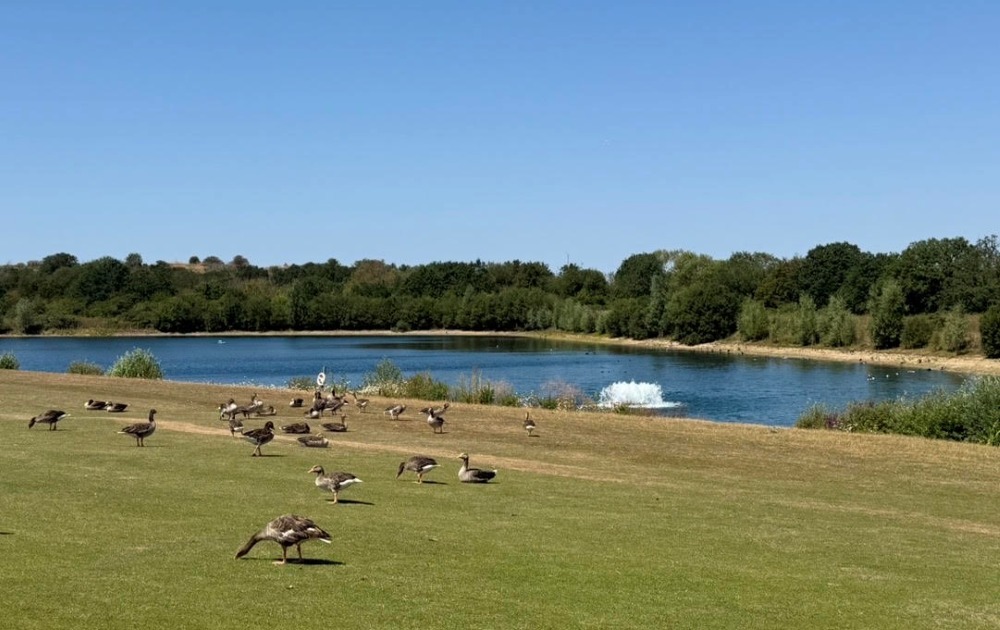
Despite only have been opened for 9 years, the course has been voted in the top five courses in Essex by the Top 100 Courses and it has hosted the PGA Professional Championships in 2025 along with the PGA Inter-County Pairs, PGA East Anglian Open and Pro Am. It is hard to remember at times when you’re playing the course just how recently the course was built, and is a credit to the greenkeeping team for how well it has bedded in and matured.
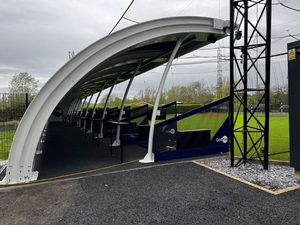
The practice facilities, which are accessed on a separate driveway as you enter the site, include an extensive 30-bay golf range, complete with floodlighting and Toptracer technology. The technology provides instant shot replays and statistical feedback on interactive game screens in each bay, which allows players to make swing adjustments and immediately see the impact on their golf shot.
Toptracer Range features games and modes suited for all ages and skill levels including a long-drive competition, play Closest to the Pin with friends, dive into advanced analytics to fine-tune your swing, and virtually tee it up at some of the world’s greatest courses. Prices for buckets of balls start at £6.15 for 30 balls, £10.90 for 80 balls, and £13.45 for 120 balls. There are also various loyalty card discounts available.
European Golf Machinery have supplied all the balls, mats and dispensers on the range. There are four PGA teaching professionals: Jon Morelline, Matt Stables, Lee Laughlin and Stuart Dowsett, who provide a variety of tuition packages. The range is extremely busy and a great way of capitalising on this excellent location within the M25.
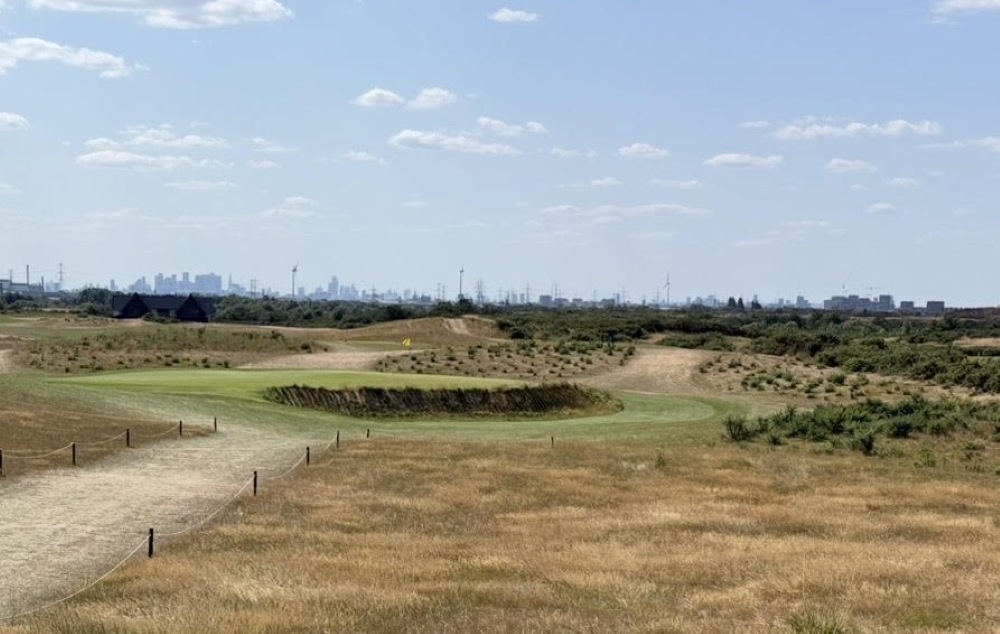
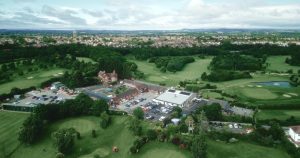
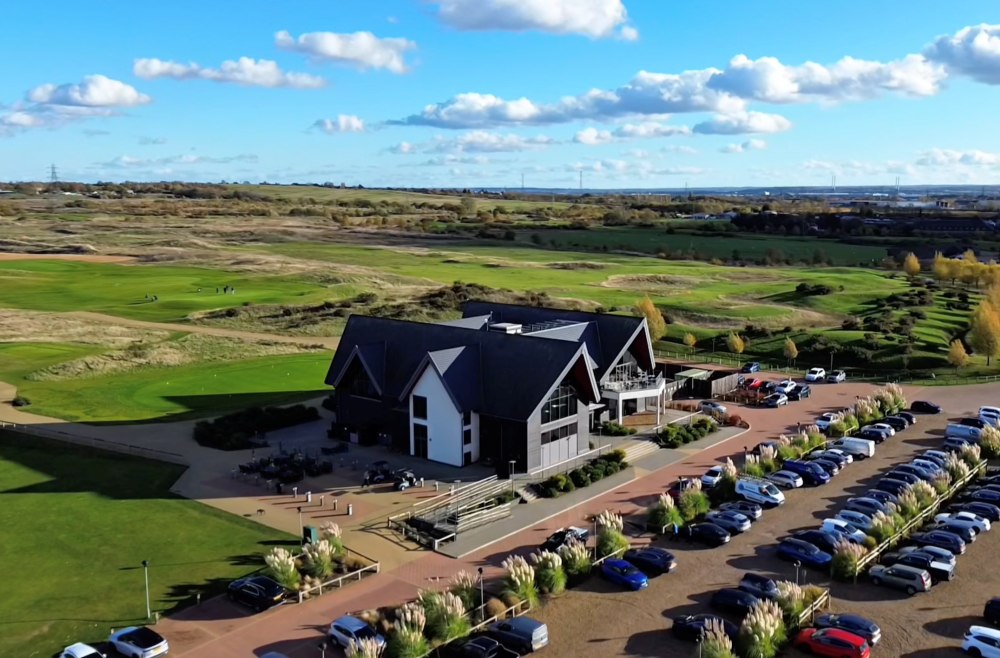
The clubhouse is modern and stylish, with the bar and restaurant spilling out onto a terrace upstairs with stunning views over the course – the perfect place to mull over your game with friends after a round or a stint in the gym. The changing facilities are equally sleek and beautifully appointed and there are a number of function rooms for weddings and corporate events – everything is covered here.
Dominic Eagle is the general manager of the whole complex and he has been in place for several years having spent the previous part of his career running other prestigious and busy golf facilities. He spoke to Golf Features:
“I was very excited to take over the management of this particular facility and it has grown hugely since I started a few years ago. The course is now fully open and maturing well, and we now have a stunning clubhouse offering an excellent food and beverage operation that includes a couple of large function rooms as well as a state-of-the-art gym. We have limited the seven-day membership but not for golfers who take out five-day membership. The conditioning of the course is extremely important to us and we are now regarded as the premium golf facility in the area. Maintaining the success is not without effort, but we have an excellent team and all departments are working well to ensure we do the very best for our customers.”
When you are given the opportunity to play a relatively new course, created by inert importation and claiming to be a links, it is not often that our expectations are exceeded in every department. Ingrebourne Links is a truly superb facility which has been created in an environmentally-friendly way for the planet and finished to an extremely high standard.
For those people that want to experience a links golf course following on from the exploits on show at Royal Birkdale this month, you need look no further if you’re in the London area than Ingrebourne Links. I am sure it will continue to improve and mature over the coming years.
For further details and to book a round, please visit the website: ingrebournelinks.com