



Reynolds Lake Oconee Eatonton, Georgia, USA Great Waters Course, 5th Hole / 422 Yards / Par-4 Architect: Jack Nicklaus (1992) by M. James Ward
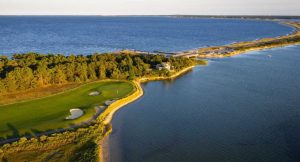
Approximately 90 minutes east of central Atlanta is the sprawling community of Reynolds Lake Oconee in Greensboro, GA. The golf side has played a major role and the real spark that elevated national awareness came six years later when Jack Nicklaus crafted a layout featuring several holes immediately near the edge of Lake Oconee. It is these aforementioned holes which drew plenty of attention, given the striking nature of where land intersects with water.
But the qualities of the Great Waters Course goes beyond those specific holes. Nicklaus fashioned other strategic elements for holes not on the lake itself.
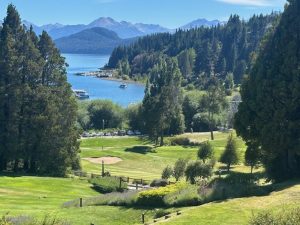
The par-4 5th is one such hole that speaks volumes in terms of providing options throughout each situation for all types of players. Turning slightly left in the drive zone, the tee shot must work its way through a 25-yard tree canopy that brackets both sides of the hole. Golfers face a crucial decision: how close a playing line they wish to choose as a pesky creek snakes its way along the left side of the fairway.
How aggressive one wishes to play their tee shot is central to achieving success at the 5th. The more daring play is up the left side. If successful, it leaves a much easier angle into a putting surface located immediately on the other side of a protective water hazard. The most interesting dimension is how the water hazard – both for the tee shot and approach – is positioned and must be handled by the golfer. Players have to decide how much risk they wish to take. There are safe plays, but such decisions are counterbalanced appropriately with more challenging follow-up shots.
Nicklaus avoided placing water elements in a direct “sink or swim” mentality. The golfer has to decide how much of an appetite for risk they can stomach.
The putting surface is also quite large – at 7,790 square feet – and is angled to follow a parallel line of play with the frontal water hazard. Those who play a tee shot further to the right of the creek are then forced to encounter a much more daunting roach, particularly if the pin position is in the rear third of the green. It is too bad the green was not contoured a bit more to add one additional element to weigh, but given the resort nature of the daily play there is sufficient challenge already.