





Golf Balls and the Model Local Rule – Golf Features explores the issues
The R&A, together with the UGGA are the two bodies responsible for setting the rules and covering the principles of golf across the world. Both organisations have been in existence for well over a century and have been operating to maintain the delicate balances within the game of golf so that skill can dominate, but the game is of maximum enjoyment to recreational golfers.
Over the last few years, it has become quite obvious that a combination of advances in equipment, both ball and club, together with stronger and fitter golfers with much better swings, has led to balls being hit further than could ever have been imagined when most of the great courses in history were laid down. This is a real problem for the golf industry and the nettle needs grasping. The R&A, together with the USGA have recently come out with proposals which will introduce a new Model Local Rule for elite players playing in elite competitions only. This new local rule ensures that the ball cannot fly as far as the ones currently on the market when hit very powerfully.
The issue is fraught with legal difficulties, as these governing bodies found when they have tried to limit performance of golf clubs in the past. Manufactures, who employ many people must not be forced to sell stock which is no longer permissible for the best players. This would create a very big economic problem for each manufacturer and they obviously look to the courts for legal compensation in such cases. So care in implementing the rule changes is very important.
The manufacturers hate the idea of selling one product to the golfing population yet providing a slightly neutered version for tournament play. It is quite understandable why they would want the customers to be able to purchase exactly the same ball that their top players were using on the tour.
Currently the rules of golf state that a golf ball must be no smaller than 1.68 inches in diameter and weigh no more than 1.62 ounces.
Basically a lighter ball will spin more, fly higher and generally not penetrate through the air as far as a heavier ball. It seems a shame that the governing bodies have decided to bring in a Model Local Rule which only affects elite golfers with very high swing speeds, rather than fractionally adjust the weight of the golf ball. A very slightly lighter golf ball would be easier for new players and those with lower swing speeds, to hit higher and give more satisfying shots. It would also be a little harder to control in windy conditions for those hitting the ball with terrific force. An increase in skill will be required to deal with this slightly floaty type of golf ball. Amateur golfers and those with lower swing speeds will hardly notice a difference, but it might be slightly easier for new players to enjoy the game.
It may well be that both the R&A and the USGA have decided to approach the issue using a Model Local Rule, rather than reducing the weight of the golf ball for legal reasons. Nevertheless, this is a great debate for the future of our game, and one that all should be involved with.
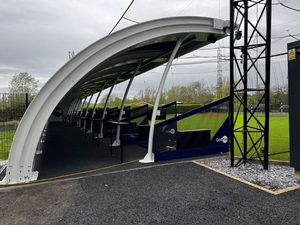
For those of us that operate golf ranges, we could all do with a golf ball that flies, slightly less far, not ones that are continuing to fly further and further. The number of serious injuries and health and safety issues that occur when balls fly outside of the range surface is a very real worry for many of us in the golf industry. Curbing the distance of the golf ball might sound like the actions of a spoilsport, but in reality it is needed.
Jack Nicklaus has been imploring the golfing bodies to make some sort of stance in relation to ball flight distance for many years. Great courses, such as St Andrews and Augusta National are reaching the limit that they can be extended. Major golf tournaments normally only occupy a course for a maximum of one week in any given year. For the rest of the time, the course will be played from shorter tees and it is quite ridiculous to force golf courses to maintain and manicure much longer tees, just for the benefit of the occasional tournament. If nothing were to be done about the distance that the ball flies courses would become more and more absurd over time and less accessible to those people that play on the course most of the year.
Charmless very long golf courses will not entice thousands more people to come and enjoy the game.
Below we have included the formal announcement by the R&A and USGA, along with a response from Acushnet, who make Titleist golf balls amongst other products, and Taylormade, one of the leading manufacturers. Both are negative in the sentiment towards the proposed changes to ball specifications.
They may say otherwise, but I think it would be fair to say that neither has contributed greatly to increasing the number of golfers starting to play the game. Growing the game is more important than they think.
I don’t agree with everything that the R&A do, but for the main part, they are excellent custodians of the game, its principles and delicacies. It is very good that they have gone out to seek the opinions of the various stakeholders in golf to make sure that their proposals are scrutinised and given a proper hearing. We would prefer to see a lighter golf ball played by everyone, as this would seem to achieve the objectives of the manufacturers and also prevent extremely long hitting players from changing the game that we all enjoy so much. It is vital that the manufacturing companies accept that both the R&A and the USGA have the right to make rule changes. This is a decision that should be taken after careful consideration and not connected to the profit margins of major sports companies.
We welcome your feedback on this important issue, so please let us know your thoughts.
The USGA and The R&A Statement
The USGA and The R&A have proposed a Model Local Rule (MLR) that gives competition organisers the option to require use of golf balls that are tested under modified launch conditions to address the impacts of hitting distance in golf.
The MLR is intended for use only in elite competitions and, if adopted, will have no impact on recreational golf.
The proposal notice, which can be found here, was sent to golf equipment manufacturers on March 13, following the Equipment Rulemaking Procedures established by the governing bodies in 2011. Manufacturers and golf stakeholders can provide feedback until Aug. 14, 2023. If adopted, the proposal would take effect on Jan 1, 2026.
Golf balls that conform to the MLR must not exceed the current Overall Distance Standard (ODS) limit of 317 yards (plus 3 yards tolerance) at modified Actual Launch Conditions (ALC) with a clubhead speed of 127 mph and based on a calibration setup of 11 degrees and 37 revolutions per second (2,220 rpm) as part of this proposal.
All other balls, including those typically used by recreational golfers with lower swing speeds, would continue to be tested using the existing ALC values (120 mph, and a calibration setup of 10 degrees and 42 revolutions per second – 2,520 rpm). The current ODS limit of 317 yards will remain unchanged and would be applied to both testing setups.
The Overall Distance Standard was established in 1976 as a ball test intended to reflect maximum potential hitting distance by the longest hitters currently playing the game.
There is a direct correlation between clubhead speed and hitting distance (further research having been published in the Distance Insights reports). Over the last 20 years hitting distance has increased on average by around 1 yard per year.
The modified testing setup in the proposed MLR is expected to reduce hitting distance by 14-15 yards on average for the longest hitters with the highest clubhead speeds.
The proposed change to golf ball testing conditions is aimed at elite players with no impact on the vast majority of golfers and there will be no change to the general rules on Equipment Standards at this time
“Hitting distances at the elite level of the game have consistently increased over the past 20, 40, and 60 years. It’s been two decades since we last revisited our testing standards for ball distances,” said Mike Whan, CEO of the USGA. “Predictable, continued increases will become a significant issue for the next generation if not addressed soon. The MLR we are proposing is simple to implement, forward-looking and does so without any impact on the recreational game. We are taking the next steps in this process, guided first and foremost by doing what’s right by the entire game.”
Martin Slumbers, CEO of The R&A, said, “We have worked closely with the golf industry throughout this process and taken time to listen carefully to their perspectives and reflect on the helpful and constructive feedback they have provided. At the core of our proposal is a desire to minimize the impact on a flourishing recreational game. We believe the proposed Model Local Rule will help us move forward in a way that protects the inherent qualities of the sport and reduces the pressure to lengthen courses. This is an important issue for golf and one which needs to be addressed if the sport is to retain its unique challenge and appeal.”
The governing bodies have consulted closely with the golf industry throughout the Distance Insights project, which commenced in 2018 but has been under continual study over at least the last two decades. This is the fourth formal feedback period to be opened in the last five years, in addition to continuing stakeholder engagement across the game, including golfers, fans, competition organizers, equipment manufacturers, golf course owners, superintendents, architects and others.
Based on feedback received from manufacturers, the USGA and The R&A are no longer considering the use of launch conditions that are optimized for each individual golf ball model to evaluate conformance. Similarly, they are not pursuing a reduction in the characteristic time limit in the existing Equipment Standards or changes to the Moment of Inertia limit of drivers at this time.

Video of Mike Whan and Thomas Pagel of The USGA explaining this model local rule can be found here (running time approximately 5 minutes)
The USGA and The R&A set out to address the long-term trend of increased hitting distances and course lengthening that they believe threatens golf’s long-term sustainability and undermines the core principle that a broad and balanced set of playing skills should remain the primary determinant of success in golf.
The findings of extensive research by the governing bodies into distance (along with the supporting research and data) were set out within the Distance Insights report into the Implications of Hitting Distance in February 2020 under two key themes: the pressure on courses to continue to lengthen and ensuring that distance did not become predominant in the balance of skills required in golf.
The report also found that the overall trend of golf courses becoming longer has adverse consequences, including by increasing the cost and time to play, limiting the advancement of sustainability efforts and reducing the challenge of courses – in some cases creating a risk of them becoming obsolete.
The 2022 Annual Driving Distance Report, which aggregates hitting distance data reported by seven professional men’s and women’s tours worldwide, has also been released, and can be found here.
Data provided for the report showed that the average clubhead speed on the PGA TOUR was 114.6 mph last year, with an average launch angle of 10.3° and average spin of 2,597 rpm. The mean of the fastest 1 percent of clubhead speeds was 127.5 mph in 2022, while the mean of the fastest 5 percent of clubhead speeds was 124.2 mph.
The Annual Driving Distance Report also reports a 4 percent average year-over-year increase in hitting distance across all seven tours, with all but the Japan Golf Tour and LPGA Tour reporting the longest values on record. The Korn Ferry Tour recorded the highest annual hitting average across all tours in 2022, at 307.8 yards.
For more information visit www.usga.org/distanceinsights
or www.RandA.org
Response from Acushnet, owners of Titleist
Acushnet, owners of the Titleist golf ball company, has issued a statement in response to The R&A and the USGA’s proposal to introduce new restrictions on the distance that golf balls used for professional tournaments and elite level amateur events can travel.
Under the new proposals and testing set up it is expected that hitting distance off the tee among players with the highest clubhead speeds will be reduced by 14-15 yards on average.
Titleist manufacturers the Pro V1 and Pro V1x, which are the most played golf balls on the global professionals tours.
In a prepared statement, David Maher, President and Chief Executive Officer of Acushnet, said: “The sport of golf has advanced and evolved over the years thanks to a thoughtful balance between innovation and tradition. One of golf’s unifying appeals is that everyone in the game plays by the same set of rules, can play the same courses and with the same equipment. Golfers can watch professionals and compare themselves to the world’s best, aspiring to hit the same shots. This unification links the professional and recreational games, enriches the connection and viewing experience of the professional game, and contributes to golf’s momentum, unprecedented growth and promising future.
“The USGA and R&A have announced a Notice and Comment to manufacturers proposing a potential rule change to golf ball testing that results in a Model Local Rule (MLR) that provides for reduced distance golf balls intended for professional and elite amateur competitions and a different set of rules for all other play. This bifurcation would divide golf between elite and recreational play, add confusion, and break the linkage that is part of the game’s enduring fabric.
“Golf is an aspirational sport, and we believe at its very best when equipment and playing regulations are unified. Golf’s health and vibrancy are at historically high levels. As we see it, existing golf ball regulations for Overall Distance and Initial Velocity are highly effective. During the past two decades, PGA TOUR average course playing length has increased by less than 100 yards and scoring average has remained virtually flat. Average PGA TOUR clubhead speed of 114.6mph in 2022 was well below the current 120mph and proposed 127mph testing conditions. The proposal of golf ball bifurcation is in many respects a solution in search of a problem.”
Under the proposed guidelines, events that adopt this MLR would require players to use a substantially shorter golf ball, similar in distance to what was available in the 1990s. The performance changes of any rolled back ball would impact every shot in the round. Players would also be required to adapt to changes in equipment with some players disadvantaged over others by this disruption. Golf ball bifurcation would invite confusion as to what level of competition would use the MLR products and how to effectively manage and officiate. In addition, multiple versions of golf ball models in the market would be confusing to golfers.
“Playing by a unified set of rules is an essential part of the game’s allure, contributes to its global understanding and appeal, and eliminates the inconsistency and instability that would come from multiple sets of equipment standards,” continued Maher. “Unification is a powerfully positive force in the game, and we believe that equipment bifurcation would be detrimental to golf’s long-term well-being. As a result, we will actively participate in this conversation with the governing bodies, worldwide professional tours, PGA Professional organizations, amateur associations and federations, and golfers, in an effort to contribute to the continued enjoyment and growth of the game.”
The R&A and the USGA has said that a dialogue would be entered into over the next five months with interested parties, with comments closing
Taylormade response
The statement read: “The USGA and R&A recently announced a proposal to create a Model Local Rule where highly skilled golfers must use a different golf ball from 2026 onwards. This will introduce bifurcation into our sport, meaning that you – the golfer – will play with different equipment than the professionals.
“We believe a large part of golf’s appeal is this underlying sense of: “I can do that, too.” And using the same equipment as the pros gives us a more accurate feel for how talented these players are. Most of us will never know what it’s like to play in Madison Square Garden, throw a touchdown in the Super Bowl, or score the game-winning goal in a World Cup final, but we can go to St Andrews, walk across the Swilcan Bridge and for a moment feel what it’s like to be a professional. Walk in their shoes, play the same courses, and use the same equipment. It’s all part of why we love this sport.
“The USGA and R&A have provided a window in which all manufacturers can provide feedback on this proposal and its potential impact. As we absorbed this announcement and tried to understand the why, as well as the impact, all of our conversations came back to one place – you, the golfer. We want your voice to be heard, so please, let us know what you think. We invite you to be part of the conversation and to be part of our feedback to the USGA and R&A: Take the survey here.”
The USGA and R&A has given a deadline of August 13, 2023 for all interested parties to register their reaction to the proposal, which, if ratified, will become part of the Rules of Golf on January 1, 2026.